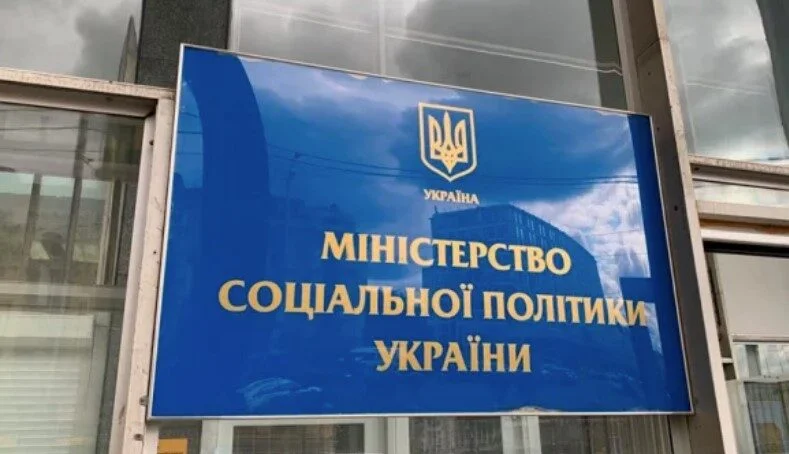
Deputy Minister of Social Policy, Family and Unity for European Integration Ilona Gavronska took part in a meeting of senior officials of the European Union responsible for humanitarian assistance to Ukraine, which took place in Brussels. During the event, she participated in a panel discussion dedicated to the relationship between humanitarian support and recovery and reconstruction processes, where she presented Ukraine’s vision on these areas. This was reported by the Ministry of Social Policy, Family and Unity of Ukraine.
In her speech, Ilona Gavronska emphasized that Ukraine’s daily challenge is to simultaneously respond to the acute humanitarian needs of internally displaced persons and prevent long-term vulnerability and dependence of people.
“Assistance to internally displaced persons begins from the moment of evacuation from the combat zone and does not end until the person is integrated into a new community. That is why the Ministry is working not only to quickly provide assistance at the first stage of evacuation, but also to support the person on the further path,” the Deputy Minister noted.
She emphasized that the path of IDPs should be based on an early and annual assessment of needs, as well as clear interdepartmental coordination under the leadership of the Ministry of Social Policy, Family and Unity.
“We are changing approaches to social security and support. Our focus is on a system that meets people’s needs, focused on their interests and needs, not status. This is why we are introducing case management and the “money follows the person” approach, and are also working on continuity of support and avoiding fragmentation between programs and implementers,” added Ilona Gavronska.
She also emphasized that humanitarian aid should be viewed more broadly than an emergency response tool. According to Ilona Havronska, Ukraine encourages an approach that combines humanitarian and recovery tools into a single, continuous mechanism to support people and communities.
“This is not just about emergency cash assistance or temporary additional payments. This approach includes support during and immediately after evacuation, adaptive assistance for the most vulnerable people, which can be quickly scaled up through national systems, as well as rapid repairs and necessary purchases for social infrastructure – temporary accommodation, care facilities, resilience centers,” she noted.
According to her, the key principles of this approach are transparency and scalability: payments and support should be launched according to clear criteria using state registers and infrastructure, including payment systems. This allows us not to stop at providing short-term assistance, but to systematically support people and communities and lay the foundation for further recovery.