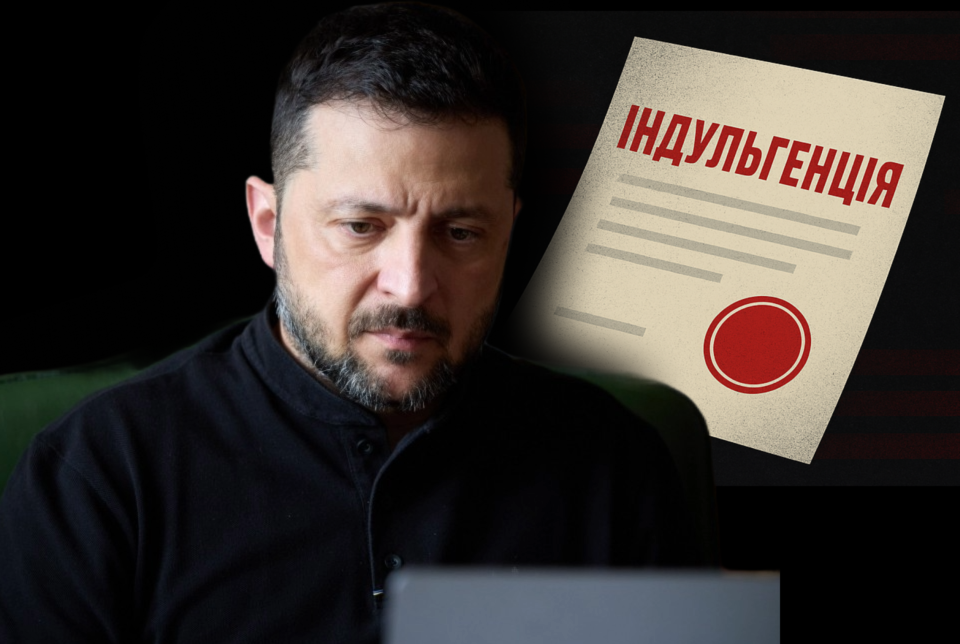
On August 27, the Verkhovna Rada Committee on Law Enforcement prepared for the second reading of bill No. 12439 under the noble title “On Improving Guarantees for the Protection of Business Entities”.
Despite the presence of a number of norms that can really help honest business, the general concept of the document is a detailed instruction on how to avoid criminal liability and “break up” criminal proceedings as quickly as possible in the presence of a “loyal” prosecutor.
A separate “bonus” is that the bill delicately sabotages the reform of the Bureau of Economic Security (BEB), effectively blocking the BEB’s ability to independently initiate investigations of economic crimes without the consent of the head of the prosecutor’s office.
An additional “gift” is the new Article 41-1 of the Criminal Code, which turns clarifications from regulatory authorities into “criminal indulgences” for dubious transactions.
Despite the formal exclusion of the most toxic norms from the first edition, the final text retains dozens of disguised procedural traps. Each of them separately may seem like a technical detail, but in combination they create a system of guaranteed disruption of investigations into economic and corruption crimes.
1. “Criminal indulgence”: how to legalize any scheme
The most cynical novella accompanying bill No. 12439 is the new Article 41-1 of the Criminal Code “Adherence to official positions of state authorities”. This norm creates a revolutionary change in the approach to liability for economic crimes: now the explanations of authorized bodies become not just proof of good faith in court, but an automatic alibi that blocks the very opening of criminal proceedings.
Such explanations will be available on tax, customs legislation and public procurement.
The technology of legalizing schemes: it is enough to agree with the “right person” in the Ministry of Economy or another authorized body, to receive an “individual explanation” for a specific dubious transaction, and even the most obvious corrupt procurement becomes untouchable for law enforcement officers. If earlier such an explanation was only one of the arguments of the defense in court, now it is a “criminal indulgence” that makes the investigation impossible from the very beginning.
This norm actually paralyzes the investigation of economic crimes and corruption by the BEB and NABU, because most of the cases of these bodies concern tax, customs violations and dubious state procurements. Having received the “correct” explanation, the defendants will be able to completely avoid responsibility for multi-million dollar schemes. This norm turns advisory explanations of government bodies into a way of legalizing crimes, creating a parallel system of “permits” for corruption schemes.
2. Blocking the start of investigations
One of the most critical innovations is the proposal to replace the procedure for initiating criminal investigations. Currently, criminal proceedings are initiated when there are “circumstances that may indicate the commission of a criminal offense,” the bill changes it to the standard of “sufficient data” for entering information into the Unified Register of Pre-Trial Investigations (URDI). Moreover, Article 214 of the CPC itself attempts to legalize the narrow definition of these “sufficient data” as a set of information that makes it possible to draw a reasoned conclusion about the presence of a crime. This radically changes the very approach that has been laid down in the CPC since 2012, where entering an information into the URDI was the simplest and fastest mechanism that guaranteed the opening of proceedings based on any statement or report.
The introduction of the “sufficient data” criterion for entering an application into the URDI actually blurs the line between the start of an investigation and the reporting of suspicion. After all, according to the provisions of the current CPC, suspicion is based precisely on sufficient data confirming the presence of the elements of a crime in the actions of a specific person. If the same standard is required even before entering information into the ERDR, then a paradox arises: the investigator is expected to make a reasoned conclusion about the elements of a crime even before he has the opportunity to conduct an investigation.
This principle will apply to all categories of criminal offenses, which means a systematic violation of the right of citizens to access justice.
In practice, applications for economic crimes and corruption may simply not be included in the ERDR at the discretion of the prosecutor, especially when it comes to “undesirable” applicants or influential figures. But the same mechanism will work for ordinary citizens: applications for theft, fraud, hooliganism, assaults may also be rejected due to “insufficient data” for the ERDR. And the court will not be able to force the pre-trial investigation body to start an investigation. After all, if now the refusal to file an application with the ERDR can be appealed in court, then after the adoption of the law the court will be forced to check not only the presence of the circumstances of the crime in the text of the application, but also to establish whether the average citizen, witness or whistleblower provided sufficient data and whether his rights were violated.
This creates a system of complete irresponsibility of law enforcement agencies for biased refusals to open proceedings.
3. Sabotage of the work of the BEB
In fact, the law the object creates a mechanism to block the work of the BEB at the very beginning of criminal proceedings. This looks especially cynical against the background of the appointment of a new head of the BEB – in fact, the new management is immediately “tied”, depriving them of the opportunity to work effectively.
If earlier the BEB investigators had relative independence in opening proceedings under Article 191 of the Criminal Code – embezzlement, embezzlement of property or taking it by abuse of official position – now each case will go through the prosecutor’s “filter”. Now the decision to enter information about a crime under Article 191 of the Criminal Code into the ERDR is made exclusively by the head of the prosecutor’s office – the Prosecutor General or the head of the regional prosecutor’s office. That is, prosecutors in positions that remain politically controlled. How this helps business is also unclear.
Thus, instead of hundreds of BEB investigators who could independently assess applications and quickly respond to relevant economic crimes, all decisions are concentrated in the hands of one person – the Prosecutor General or the head of the regional prosecutor’s office. This creates ideal conditions for “manual management” of cases: it is enough to have influence over one prosecutor to block the investigation of relevant economic crimes in the entire region.
4. Property seizure under threat
Although the idea of temporary property seizures was formally abandoned, a critical loophole remained in part three of Article 170 of the CPC: in proceedings without suspects, the seizure of funds of business entities is automatically lifted after four months. This approach is especially dangerous in complex economic and corruption cases involving influential figures, for whom lifting the seizure even for half a day may be enough to alienate assets. As a result, funds can be withdrawn even before suspects appear in the case. This poses a serious threat to the loss of evidence and assets that could potentially be confiscated.
The final version of the bill also stipulates that the request for the seizure of property must be sent simultaneously to the investigating judge and the defense before the trial. This construction does not create additional real guarantees for the defense, which already has the right to appeal the seizure. Instead, it effectively warns those involved in the investigation about the prosecution’s plans.
As a result, suspects or persons associated with them are given time to dispose of assets, re-register property, or withdraw funds from accounts. As a result, seizure as a preventive measure may lose its meaning and effectiveness. This is especially dangerous in cases of corruption or economic crimes, where the speed of blocking assets is of key importance, and opens up a simple mechanism for avoiding liability.
5. Complicating searches
The draft law requires mandatory recording of “actual data obtained during a search” (Article 104 of the Code of Criminal Procedure). In practice, this may have absurd consequences. If interpreted literally, investigators will have to record on video the contents of every document, every page, every file that is seized. This will make the search procedure technically and procedurally untenable, especially when it comes to large arrays of documents or electronic media. Any incomplete recording will automatically become grounds for declaring all evidence inadmissible. Even if the search reveals a scheme to embezzle billions of hryvnias in budget funds, all evidence will be destroyed in court due to a “technical” violation of recording.
An additional field for abuse is Article 107 of the Code of Criminal Procedure, which gives the defense the right to record the search “by all available means” without restrictions. This means the possibility of live broadcasts on social networks with geolocation, the names of investigators and details of investigative actions. The secrecy of the investigation and the safety of the participants in the process are sacrificed for “transparency”.
The new version of Article 234 of the Criminal Procedure Code makes it mandatory for the property owner to participate in the consideration of a petition to legalize an urgent search. An elementary algorithm for failure: the owner simply ignores a summons to court – and even a perfectly conducted search becomes illegal.
The bill radically narrows the grounds for urgent searches without a court order. This norm was already changed in a similar way by the bill that NABU and SAPO tried to dismantle. As soon as everything was returned after the protests, less than a month passed before the Rada made another attempt to extend this norm.
If now Part 3 of Article 233 of the Criminal Procedure Code allows such searches for “saving people’s lives or property and directly prosecuting suspects”, then the new version removes the word “property” and leaves only saving people and prosecuting them, and on the exclusive list of crimes, the majority of which are under the jurisdiction of the SBU. At the same time, it is the SBU that is currently “nightmaring” business most of all with cases of treason and trade with the Russian Federation.
But the NABU and the SAPO, which deal with high-ranking corruption, are subject to strict restrictions. At the same time, in corruption cases, urgent searches are often carried out precisely for “saving property” – the seizure of the bribe object, when money is transferred from person to person. Now, in a typical situation, when the NABU monitors the transfer of a bribe and has