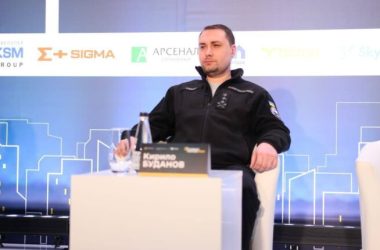
After another change in the state affordable mortgage program “eOselya”, more and more Ukrainians are asking themselves the question: does it really remain affordable? People’s Deputy Yana Zinkevich is convinced that the new rules significantly narrow the circle of those who can take advantage of a housing loan, and for many – actually close this opportunity, reports Kommersant Ukrainsky.
Since last week, the program has been operating under updated conditions. Now there are strict restrictions on the area: for one or two people, a mortgage can only be obtained for an apartment up to 52.5 m². If the family is larger, 21 square meters are added for each family member. In addition, banks have begun to carefully check all the housing available to the borrower. If the documents already show a certain area, they may refuse a new loan.
A separate problem is the situation of internally displaced persons. According to the deputy, “displaced persons receive only 4% of all loans.” At the same time, an additional restriction has been imposed on IDPs: they are allowed to buy apartments only in new buildings that are no more than three years old. There is not much such housing on the market, and it is usually much more expensive than secondary housing.
Despite the status of “affordable”, the program requires significant start-up capital. “You need to immediately pay 20% of the cost of the apartment as a down payment. Another 12% will go to taxes, a notary and an appraisal of the apartment,” Zinkevich emphasizes. In fact, to buy a house worth about 2 million hryvnias, you need to have at least 500-600 thousand hryvnias in cash. For many Ukrainian families, especially those who lost their property due to the war, this is an unaffordable amount.
“How can people who have lost everything due to the war collect such an amount for a down payment? A rhetorical question,” she notes.
The issue of the military is no less painful. According to the deputy, banks often refuse those who serve near the front, considering it a “big risk.” “That is, defending the country there is a duty, and getting the right to your own housing is “too big a financial risk.” This is disrespect for everyone who is on the front line,” Zinkevich emphasizes.
An additional obstacle is delays in government payments, because of which real estate sellers do not want to wait for monthly funds and refuse to work under the program. As a result, even those who formally meet the requirements face difficulties in practice.
According to the deputy, the current “eOsela” model stimulates the sale of expensive new buildings more than it solves the housing problems of citizens. Teachers, doctors, and displaced persons often do not pass the strict income requirements. “The program should become humane,” she is convinced. Among the necessary changes are permission to buy housing on the secondary market without a three-year limit, the abolition of “risky” restrictions for the military, and real benefits for those who really need support.
“Otherwise, we are dealing with a great imitation,” Yana Zinkevich concludes.
And this formulation today reflects the sentiments of many Ukrainians, for whom their own housing in wartime conditions remains not a luxury, but a basic need and a symbol of stability.
“eHousing”: key changes
The updated rules of the state program “eHousing” came into effect on February 9, 2026. The main emphasis of the changes is the introduction of clear restrictions on the area of housing.
Apartments: Basic limit – 52.5 sq. m. per family of 1-2 people (+21 sq. m. for each additional member), but a maximum of 115.5 sq. m.
Houses: Basic limit – 62.5 sq. m. m for 1-2 people (+21 sq. m for each additional person), but a maximum of 125.5 sq. m.
Age requirement: For housing up to 3 years old, an excess of 10% is allowed. For older real estate – no deviations from the norm.
Payment above the norm: If the area or cost exceeds the limits, the borrower must pay the difference himself as part of the first installment.
Area standards: detailed calculation
The new rules of “eOselya” clearly distinguish between opportunities for different types of families. If a family consists of three people, the maximum area of the apartment will be calculated as 52.5 + 21 = 73.5 sq. m. However, no more than 115.5 sq. m, for houses the maximum is 125.5 sq. m.
Previously, the rules were more loyal: the limit of 52.5 sq. m applied only to one person, and for each additional family member, another 21 sq. m was added. This allowed, for example, a couple to qualify for the program, even with a home of 73.5 sq. m.
Now the conditions have become stricter: from today, a family of two can count on a preferential mortgage only if the area of their current property does not exceed 52.5 sq. m.