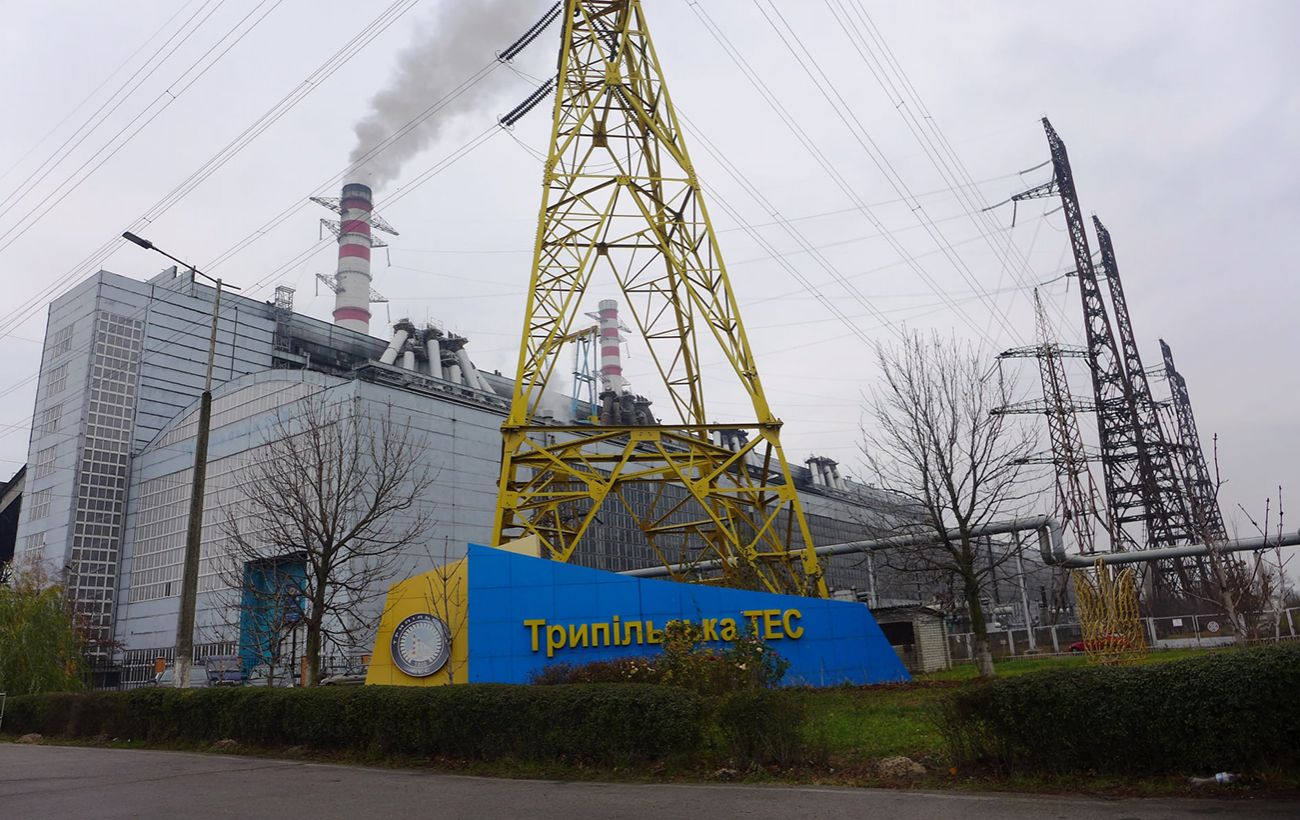
More than a billion hryvnias of budget funds allocated for the restoration of the energy sector after the Russian shelling could have been used through related firms without work experience. These are contracts for the Trypilska and Zmiivska TPPs, which are part of the state-owned company Centerenergo. This is stated in the investigation of the project “On the Edge”.
According to journalists, state contracts were awarded to three companies — LLC “Spetshimresurs”, LLC “GS Group Development” and LLC “Technorishens In particular, LLC “Technorishenskaya”, which received contracts from Centerenergo, Trypilska and Zmiivska TPPs for over 78 million hryvnias, changed owners after the contracts were executed. Currently, legal proceedings are ongoing due to the untimely delivery of equipment and underdelivery of goods.
Journalists claim that the companies received contracts using documents with signs of forgery. In the tender proposals, certificates were submitted about the alleged experience in performing similar works, although in fact the enterprises had no income and did not carry out similar activities. According to the tax service, such transactions were not reflected in the financial statements.
In 2023, Oleksiy Beskupsky, a former employee of PJSC “Shakhta Nadiya”, became the director and founder of LLC “Technorishenskaya”. Before that, the company provided special equipment services for the same mine, where Beskupsky was responsible for logistics. According to investigators, he is also involved in criminal proceedings related to purchases by the state-owned enterprise Volynvugol, and is also the head of the Ukraine for Children charity fund.
The company’s accountant was Iryna Bezuglova, who later worked in other companies associated with this scheme. Journalists also noted that several companies used the same IP address for work, which may indicate joint management.
Another company, Spetshimresurs LLC, is headed by Yulia Korenivska, a former employee of the Ukraine for Children charity fund. She is a linguist by education, and is involved in culinary blogs and publishing books with smoothie recipes. After re-registration, the company began receiving government contracts from Centerenergo and Trypilska TPP for over 100 million hryvnias.
At the same time, as noted in the material, some of the work was performed untimely or of inadequate quality. Currently, the courts are considering Centerenergo’s claims against Speckhimresurs for compensation for damages in the amount of about 47 million hryvnias.
The third company, GS Group Development LLC, after a change of owners received state contracts worth over 730 million hryvnias. Its director was Igor Chaplynsky, who previously worked at the state-owned enterprise Volynvugol and had professional contacts with Oleksiy Beskupsky.
Journalists note that the company also did not have the necessary permits to perform work of increased complexity in the energy sector, in particular permits for labor protection and industrial safety.
The material emphasizes that Trypilska and Zmiivska TPPs are part of the structure of the state-owned company Centerenergo, and large-scale contracts were mostly concluded under direct contracts. Therefore, according to the authors of the investigation, such decisions could hardly have been made without the knowledge of the company’s management.
Journalists also note that in 2023, the supervisory board of Centerenergo was headed by Andriy Gota, the former head of the office of the head of the Office of the President Andriy Yermak. In 2024, the company also changed its head, explaining this by the need to respond promptly to the destruction of energy infrastructure after Russian attacks.
According to investigators, the companies that received contracts were connected through common directors, accountants, acquaintances and previous projects. Some of them also appeared in criminal proceedings related to state procurement in the coal industry.
The authors of the material emphasize that during mass blackouts and constant Russian attacks on energy infrastructure, the restoration of TPPs was of critical importance for the country’s energy security. At the same time, significant funds could be allocated to contracts for companies that had no experience in restoring energy facilities.