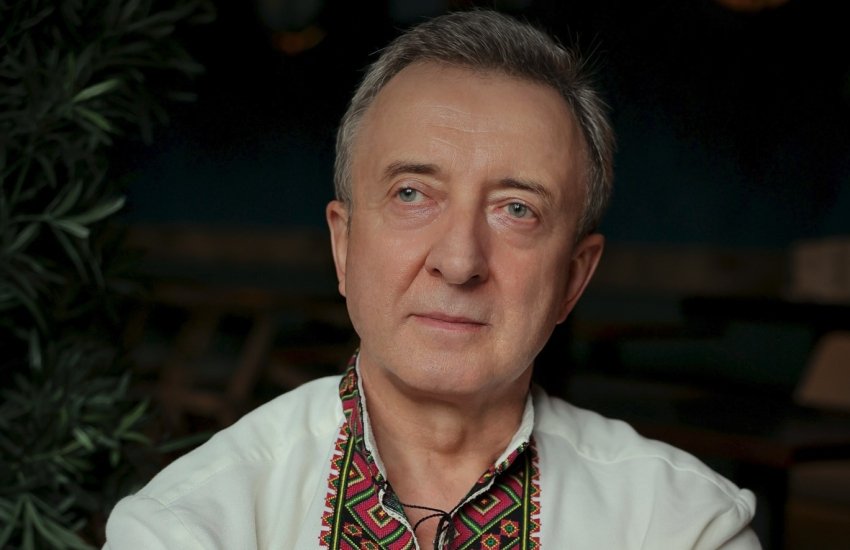
After massive attacks, dairy enterprises switched to autonomous power supply: in January alone, the company “Milk Alliance” burned 140 tons of diesel fuel worth 8 million UAH. At the same time, product prices are not being increased. The chairman of the supervisory board of the “Milk Alliance” group of companies, Serhiy Vovchenko, told Delo.ua why even unprofitable cheese production continues to operate and when they will begin to restore the plant in Bashtanka destroyed by the rioters.
Due to long power outages, many enterprises are now working in extreme conditions. How have your factories adapted to this situation?
— This is also a serious challenge for us. We tried to switch to imported electricity. It is more expensive, costs 15 UAH per kWh, compared to domestic electricity at 12 UAH. But when the rioters cut lines, cables, and attack substations, even the presence of a paid import contract does not save – there is physically nowhere to get electricity. After the massive shelling in January and February, our enterprises mostly operated on autonomous power sources. In the Kyiv region, the situation was the most difficult: our plant could not receive electricity at all for some time. It was a little easier in Pyriatyn and Zolotonosh, but even there the main load fell on generators. In January alone, we used about 140 tons of fuel — that’s about 8 million hryvnias. The amount is, of course, large, but there is no other way out.
How much did this lead to an increase in the cost of dairy products?
— In fact, the impact is not critical yet. Electricity in the structure of our costs takes up a small share — about 3%. The main component of the cost is raw materials, which make up about 67%. Despite the high costs of electricity and autonomous power sources, “Dairy Alliance” did not increase the cost of products in order to retain its customers.
So, to date, you have not added a single hryvnia to the cost of products?
— We definitely do not plan to increase the cost of products, especially cheeses. Cheeses are very difficult to sell now. It is an expensive product, and competition with imports, primarily from Poland, is very strong — Polish cheeses are cheaper, and consumers often choose them.
Is this direction already a problem for business?
— Unfortunately, cheese production is really unprofitable now. Yes, we could simply focus on more profitable products. But what to do with a cheese factory that employs over 500 people? It is no longer just about business. We cover the losses from cheese production with a small profit from whole milk products. Recently, the Union of Dairy Enterprises submitted a proposal to the Cabinet of Ministers of Ukraine and initiated the introduction of cashback on weight cheeses, which were previously not included in the list of products with state support. The idea has already been previously supported at the government level. Now we are waiting for the final document and hope that this decision will at least partially help increase sales of Ukrainian cheeses.
Have the volumes of orders from retail chains and retailers decreased due to power outages and reduced store hours?
— No, the volumes did not fall — neither in January nor in February. Moreover, when we hold promotions, sales even increase. Yes, many retail chains have reduced their working hours: in the morning, stores often do not open due to the lack of customers, and they start generators in the afternoon. But in the evening, people return home from work and do their shopping.
How busy are your factories now? After all, power outages affect not only processing, but also the work of farms.
— Despite all the difficulties, the situation with raw material processing remains stable. In January, we processed about 750 tons of milk every day. This is about 15 tons more than a month earlier. The reason is simple: there is more raw material on the market. It is worth understanding that approximately a quarter of the products produced in Ukraine were exported, the rest remained for domestic consumption. But due to the fall in prices in Europe, this figure has decreased significantly. Our products have become uncompetitive, and it has become practically impossible to sell them abroad. In addition, the domestic market physically cannot absorb the entire potential volume of production: if earlier we were focused on 45 million consumers, today there are about 30 million of them. The company is trying to keep product prices down and not pass on the costs to consumers. Photo provided by the company’s press service.
Tell me, what share of your production does export take up from all sales?
— Until 2014, our structure was completely different: about 60% of products were exported, and only 40% remained for the domestic market. According to the results of last year, exports amounted to only about 20% of all sales.
And what are the forecasts for exports for this year?
— So far, they are not very optimistic. In Europe, prices have collapsed due to overproduction of milk, and accordingly, European producers are looking for a place to sell their products and are gradually pushing us out of the markets of North Africa, the Middle East, and the former republics of the USSR. In Kazakhstan, we have been squeezed out by racist suppliers. They are much closer logistically: the goods arrive quickly and cheaply, while we have to transport them across five countries and two seas.
And what are the forecasts for exports this year?
— Not very optimistic yet. In Europe, prices have collapsed due to overproduction of milk, so European producers are looking for places to sell their products and are gradually pushing us out of the markets of North Africa, the Middle East, and the former republics of the USSR. In Kazakhstan, we have been squeezed by racist suppliers. They are much closer logistically: the goods arrive quickly and cheaply, while we have to transport them through five countries and two seas. For each kilogram, this adds almost a dollar to the cost price, while their expenses are mere kopecks.
Can the company do without exports at all?
— It cannot. There is only one way out — to look for new sales markets. We are currently actively working on this: we exhibited product samples at the World Food Exhibition in Dubai, the so-called Gulfood. There is interest in our products — both in quality and in the range. The only problem is the price: for the products to be competitive, the raw material should cost about 12 UAH per liter, and today it costs 14.5 UAH. Therefore, we will deliberately sell some of the products for export – at best “at zero”, and sometimes even with a small minus. But this is important in order to stay on the market and not be forgotten. When the market situation changes, then we will be able to increase sales and start earning.
Which countries are you considering for export?
— We are currently considering the countries of North Africa — Egypt, Morocco and Arab countries in the Middle East.
The Bashtan cheese factory is not working now — it was destroyed. You said earlier that you are considering the possibility of resuming work. Given the current energy and security risks, is it worth doing it now?
— It is important to understand that the decision to resume is not only a matter of electricity, but much broader. There are three key factors here. The first is security. Mykolaiv and the region are under constant shelling, and Bashtanka is located only 40 kilometers from the city. Resuming production in conditions where a new arrival could occur at any moment is a very big risk. The second factor is raw materials. When the plant was operating, we received about 60% of our milk from the Kherson region. Now part of the region is occupied, in another – the livestock was destroyed due to hostilities. In the Mykolaiv region, the situation is similar – there is simply no raw materials. And the third factor is human resources. Due to hostilities, the Rashists passed through Bashtanka twice, first they went in one direction, then the Armed Forces drove them in the other… Accordingly, many people left, and today there are serious problems with personnel. Therefore, until at least the hot phase of the war ends, we are not considering the issue of resuming the plant’s work.
You previously said that you plan to invest $2.3 million in new filling and packaging lines. Did you manage to implement any of this?
— Yes, we have already managed to implement some of the plans. At the baby food plant, we have implemented two investment projects — we have installed new modern equipment for packaging, and these lines are already operating. Now we are at the stage of making decisions and completing negotiations on the next step. If everything works out, we will also update the packaging lines at the plant in Yagotyn.