Since the beginning of the full-scale invasion of Ukraine, seven foreign clothing brands have entered Ukraine, four of them Polish companies. In parallel, the Polish group LPP (best known in Ukraine for the Sinsay chain) is growing rapidly in our country. It is already a leader in the fashion segment with a significant gap from competitors in terms of the number of stores and revenue and is among the 20 largest retailers in the country. Another strong player is going to enter the Ukrainian market soon – the Polish Pepco. Why are the Poles the most active investors in Ukraine despite the war, the aggravation of relations between Warsaw and Kyiv, and the Russian Federation’s attempts to incite a conflict between our states? Is the Ukrainian market ready for a new major player? What risks does the company itself see? How many stores does it plan to open in 2026? Will Pepco’s exit signal a new wave of international expansion?
Mind addressed these and other questions to Pepco’s top management and a number of market experts. Not all of them were ready to assess the prospects for the new player’s entry and market development, which is probably due to uncertainty due to the war. Nevertheless, we analyzed the basic disposition and chances for success of the Polish discounter in the clothing and home goods retail segment.
European discounter with African roots: a turbulent history of ownership
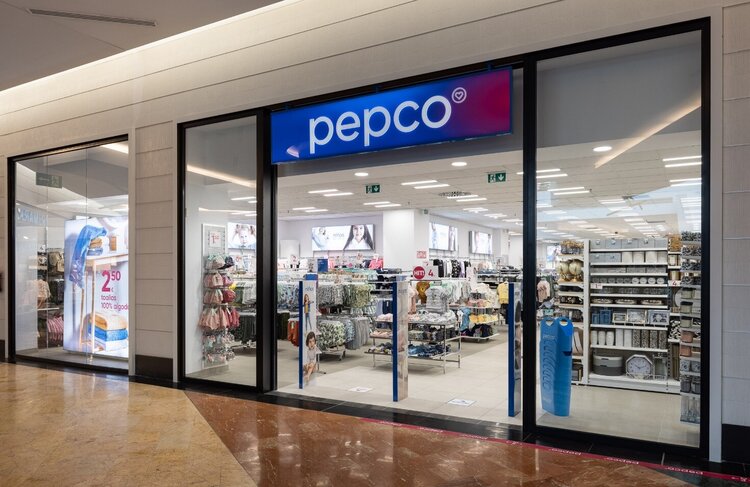
Pepco’s future entry into Ukraine will not just be the appearance of another fashion retailer. This is one of the largest discounter chains in Europe, which in more than two decades has transformed from a local Polish project into an international company with billions in turnover. Pepco’s ownership history resembles a roller coaster. It began in 2004. Then the South African Pepkor group launched the brand’s first stores in Poland. A year earlier, Pepkor acquired 14 stores of the British Poundstretcher chain and decided to use Poland as a springboard for European expansion. The Pepco brand was created as a discounter of non-food products for families with middle and lower-middle incomes.
The battle of the Polish giants begins: can Pepco push Sinsay in Ukraine
So the company’s roots are not in Poland, but in South Africa. The parent group Pepkor has been running a business since 1965, which is now one of the largest discount retailers in South Africa.
Later – in 2015 – another South African retailer appeared in the ownership structure: Steinhoff International acquired 92.3% of the shares of Pepkor Holdings, which owned businesses in Africa and Europe, including Pepco. The transaction amount was about $ 5.7 billion. After that, Pepco became part of the global retail empire Steinhoff. Interestingly, the source of financing for the deal was partly Steinhoff shares, which were received by the owners of Pepkor. So Pepkor shareholders became Steinhoff shareholders and essentially merged the businesses. At that time, Steinhoff was considered one of the most successful companies in South Africa and was actively buying up retailers around the world. But in 2017, Steinhoff found itself at the center of a scandal: the company announced the discovery of large-scale financial fraud. After that, the price of Steinhoff shares collapsed by more than 90%.
Meanwhile, Pepco became one of the few assets of the group that continued to grow rapidly and generate profits. In 2021, Pepco Group held an IPO on the Warsaw Stock Exchange. The company was valued at 5.1 billion euros. The listing became the largest IPO in Poland that year. After the IPO, Steinhoff retained a controlling stake, but the situation gradually changed due to the restructuring of the parent company’s debts. In 2023, Steinhoff ceased to exist as a public company. All assets and liabilities were transferred to the newly created entities – Ibex Topco B.V. (Netherlands) and its subsidiary Ibex Investment Holdings (South Africa). The former company is owned by five independent Dutch Stichtings (funds, trusts created for restructuring), and the actual beneficiaries are international creditors.
Currently, the largest shareholder of Pepco Group remains Ibex Topco B.V., which owns 63.5% of the company’s issued share capital. About 5% of Pepco Group’s shares are held as treasury shares, purchased under the buyback program. The remaining shares are freely traded among institutional and private investors, including Silver Point Capital, PSG Asset Management, Trigon Asset Management and others.
4.5 billion euros in revenue, 4,000 stores, one brand: how Pepco is preparing for a new wave of expansion
For the group, 2026 is becoming one of the most dynamic years in recent times. The company continues to expand and at the same time restructures its business model. The financial results provide grounds for this. According to the results of the 2025 financial year, Pepco Group’s revenue grew by 8.7%, to 4.523 billion euros, EBITDA – by 10.3%, to 865 million euros. Net profit – by 19.7%, to 219 million euros.
Until recently, Pepco Group operated three retail chains – Pepco, Poundland and Dealz. However, after the sale of Poundland in 2025 and the announced exit from Dealz Poland in June 2026, the group is to become a single-brand company.
This model should simplify management, increase investment efficiency and accelerate the international expansion of the Pepco network. This brand operates in the value-discount retail format (goods at the lowest possible prices due to cost savings). The assortment is based on clothing for children and adults, household goods, toys, textiles, decor, kitchenware. The network has more than 4,000 stores, which employ 32 thousand employees. Every month they serve about 36 million customers.
In parallel with the change in corporate structure, Pepco continues to expand its geography. In June 2026, the company opened its first stores in North Macedonia, which became the 19th market of the network’s presence. Currently, Pepco operates in Poland, the Czech Republic, Slovakia, Hungary, Romania, Croatia, Slovenia, Lithuania, Latvia, Estonia, Bulgaria, Italy, Serbia, Spain, Austria, Germany, Greece, Portugal.
Against this background, entering Ukraine seems to be a logical continuation of the strategy. If the company’s plans are implemented, the Ukrainian market may become the jubilee, 20th, in Pepco’s geography – and the first new direction of expansion after the completion of the group’s restructuring.
Which market is Pepco entering
The group is entering not a crisis market, but a rather dynamic one. According to RAU and YouControl, in 2025 the total volume of Ukrainian retail trade reached UAH 2.09 trillion excluding VAT – this is 17.6% more than a year earlier. Even after adjusting for inflation, the real growth was 9.6% – this is four times more than the growth of Ukraine’s GDP (+2.2%). To compare the scale: Pepco Group’s revenue is about 10% of the entire Ukrainian retail market. The largest segments of the industry are grocery retail (UAH 776.5 billion), pharmacy (UAH 241.3 billion) and fuel (UAH 238.8 billion).
The total volume of the fashion market is not given in the studies – only the indicators of the top chains. However, they indicate the high dynamics of the segment. In 2025, the ten largest companies operating in the field of clothing, footwear and accessories increased their total turnover by almost 40% – to UAH 42.7 billion. Such growth is more than twice the dynamics of the entire industry and is one of the highest indicators among retail segments.
Why are Polish chains ahead of their competitors in the Ukrainian market?
Despite the full-scale war, Ukraine attracts international fashion retailers. In recent years, at least seven new brands have entered the Ukrainian market. It is significant that most of them are of Polish origin or are being developed by Polish companies.
The first in 2023 was the HalfPrice off-price store chain, part of the Polish MODIVO Group. The same year, the Polish outlet store chain Discounterra debuted in Ukraine. In 2024, the Polish women’s clothing brand Greenpoint joined them, and in 2025, the Worldbox sports store chain, which is also part of MODIVO (this group additionally promotes the CCC, Nike, Boss, Guess, Polo Ralph Lauren, Calvin Klein brands in Ukraine). In addition to Polish companies, during the war, the French brand Karl Lagerfeld Jeans and the Turkish Mavi entered the Ukrainian market – both in 2025, and in 2026, the British Barbour opened its first store in Ukraine.
This geography of new players is not accidental. According to the director of UTG (real estate consulting and brokerage) Evgenia Loktionova, it is Polish retailers who today have a number of competitive advantages for working in Ukraine.
“Firstly, it is a common logistics and operational infrastructure. Secondly, state support for Polish business plays an important role. In particular, the state export credit insurance corporation (KUKE) covers the war risks of Polish investors – this is something that most Western European and American retailers lack,” she explains.
The third factor is the correspondence of the format of Polish discounters to the current purchasing power of Ukrainians.
“The migration phenomenon and cultural synergy also play a role. Millions of Ukrainians live or regularly visit Poland. They have personally met Polish brands and are used to them. Returning home, these consumers already have a formed trust in brands, which significantly reduces retailers’ costs for marketing and gaining an audience,” the UTG director clarifies.
Why did Pepco decide to enter Ukraine now?
At first glance, Pepco’s decision to invest in the Ukrainian market during the war may seem risky. However, the current situation also opens up new opportunities for international discounters.
According to Evgenia Loktionova, this decision is explained by a combination of three factors: “First, the readiness of the business model for crisis demand. Second, the brand already has high organic recognition among Ukrainian consumers. Third, the current situation on the commercial real estate market creates the possibility of a relatively inexpensive start and opens a window of opportunity for the development of the network.”
The investment attractiveness of the Ukrainian market can be based on several factors. “First, there is high demand for the discounter format in Ukraine. Due to the war, the purchasing power of Ukrainians
Due to the war, purchasing power has increased, which has formed a culture of searching for maximum value for minimum money. Pepco’s format – high-quality clothing and home goods at low prices – corresponds to the current state of the Ukrainian economy,” the expert explains.
Secondly, the adaptability and stability of the Ukrainian market. “Ukrainian retail has proven its unique viability and flexibility in wartime conditions (energy supply crises, changes in logistics chains). Stable financial indicators of the Aurora, Sinsay, etc. chains demonstrate the high potential for profitability of non-food retail,” says Yevgenia Loktionova.
Pepco confirms these conclusions.
“Why did we decide to enter Ukraine despite the war? We approach this issue very carefully. In Ukraine, there is already real brand recognition thanks to the large number of Ukrainians who have lived in Poland and other markets where Pepco is present and are familiar with our stores. The market assessment confirmed that there is a significant demand for our products and prices. In addition, we understand the everyday needs of Ukrainian families, in particular the need for access to affordable clothing and basic household and children’s goods,” says Marcin Stanko, Pepco’s Chief Operating Officer for Central and Eastern Europe.
When asked about Ukraine’s potential compared to other countries of presence, Pepco answers diplomatically: “In this context, we do not compare individual markets. Ukraine is a unique operating environment. Our immediate task is to gain experience during the pilot phase, understand customer expectations and assess how Pepco’s offer can meet local needs in a safe and responsible way.”
What are the plans for 2026 and the conditions for accelerating expansion?
The company has not yet disclosed how many stores it plans to open in 2026 and the amount of investment for the first stage. Pepco is going to start a pilot project in the next few months.
“We want to open several test stores to evaluate their work and, most importantly, the safety and well-being of colleagues on the ground. The safety of employees and customers is the top priority. This is a carefully controlled, small-scale assessment. The scale of further expansion of the network will depend on the results of this project, in particular on trade indicators and, above all, the security situation,” explains Marcin Stanko.
In which cities will the first stores appear and what are the criteria for their selection?
Earlier, there were suggestions in the media that the retailer could start in the western regions, in particular in Lutsk and Ternopil. Pepco is currently keeping the intrigue. “We do not disclose information about specific cities or regions before the opening. The choice of locations is based on operational feasibility, local market conditions and, above all, the security situation. The launch will be assessed on the basis of customer demand, trade and operational efficiency, local market conditions, as well as a constant assessment of the security situation,” clarifies Pepco’s director for the Central and Eastern Europe region.
Who will Pepco have to compete with?
Pepco is entering the Ukrainian market, where the affordable fashion retail segment already has strong players. Its leader today is the Polish group LPP, which develops the Sinsay, Reserved, Cropp, House and Mohito brands. According to the results of 2025, the revenue of the company’s Ukrainian division increased by 53.6% to UAH 16.9 billion. This is almost 40% of the total turnover of the ten largest fashion retailers in Ukraine. It is Sinsay that is most often called Pepco’s main competitor. Both chains operate in the affordable price segment and sell not only clothing, but also household goods and children’s products. Pepco will have to compete not just with Sinsay, but with the already established LPP ecosystem in Ukraine. While Pepco is entering the market with a few stores, Sinsay already has about 400 outlets in Ukraine. The scale of the network means better logistics, high brand recognition and wider coverage, particularly in small cities. In the household goods segment, Pepco’s competitors may be JYSK (113 stores in Ukraine), and in the category of everyday goods, the Aurora chain (over 1,900 outlets) and Chervony Market (about 175). However, the UTG director warns against completely identifying these retailers. “Comparing Pepco with Sinsay, JYSK, LC Waikiki, Aurora or other chains is quite correct, but only categorically, because each comparison has its limitations due to the difference in formats,” Evgeniya Loktionova clarifies.
Pepco is cautious about who it considers its main competitors. “Ukraine has a dynamic retail sector, where both local and international players serve customers in different segments. We respect the market that already exists. Our task is not to comment on the actions of competitors, but to understand the needs of customers,” says Marcin Stanko.
Does Pepco have any trump cards?
According to Yevgenia Loktionova, the retailer has several advantages that will work in Ukraine.
“Ukrainian retail is saturated, but Pepco has trump cards that can squeeze out local players (Aurora, Chervony Market or Sinsay). First of all, these are extremely low prices in conditions