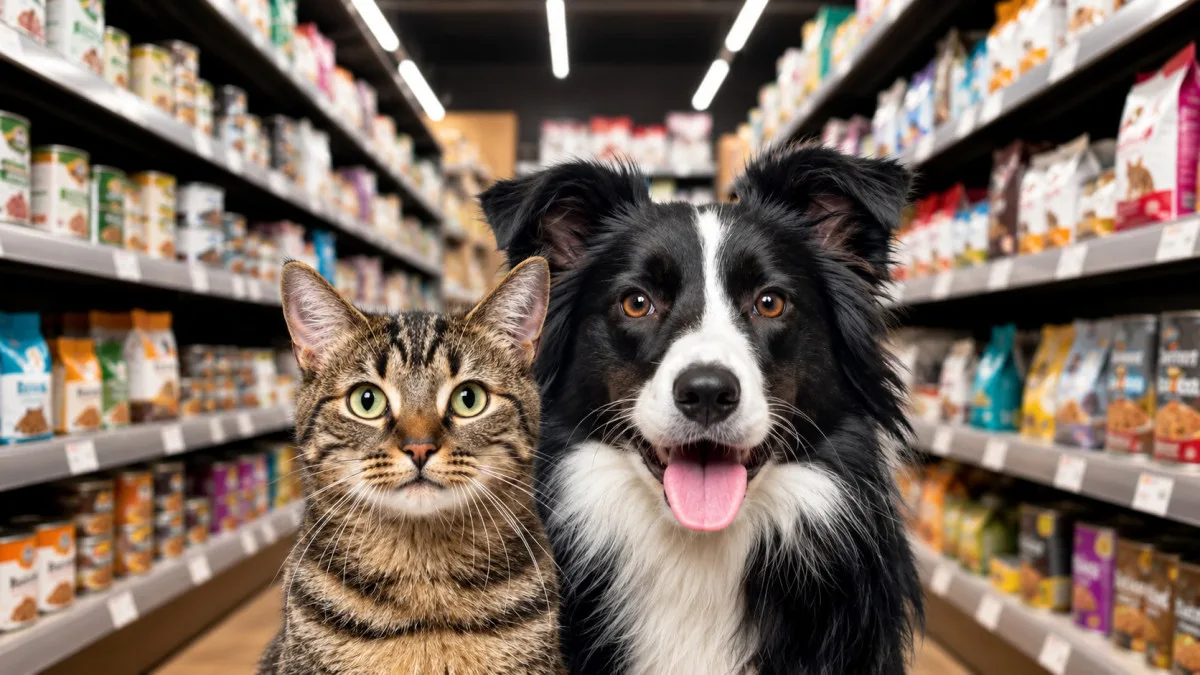
The animal welfare organization UAnimals has once again appealed to the government and the Ministry of Economy, requesting a review of current sanitary restrictions regarding the presence of animals in retail stores, food service establishments, gas stations, and other public spaces. The organization proposes allowing businesses to decide for themselves whether visitors may enter their premises with animals, as well as implementing zoning and specific access policies.
UAnimals first presented this initiative to the Cabinet of Ministers, the Ministry of Economy, and local government authorities earlier in 2025. At that time, according to the animal welfare advocates, the Ministry of Economy indicated that work on the necessary changes had begun; however, the relevant amendments have yet to be introduced.
UAnimals emphasizes that this issue is particularly urgent with the onset of cold weather, as the ability to bring an animal indoors during low temperatures can be crucial for the animal’s safety.
Businesses support the idea of setting their own rules
UAnimals reported that the initiative is supported by several major companies, including Epicentr, Aurora, Silpo, and UPG.
“Businesses support an approach where individual establishments decide for themselves whether animals—specifically people accompanied by their cats and dogs—are permitted on the premises. We are proposing a review of sanitary restrictions to allow businesses to independently establish access rules for animals, including the use of zoning and the implementation of specific guidelines for visitors,” the activists stated. UAnimals Calls for Amendments to Ministry of Economy Order
In early October, the organization once again appealed to the Ministry of Economy, urging amendments to Order No. 590 (dated October 1, 2012), which governs requirements for procedures based on HACCP principles. UAnimals also proposes reviewing other sanitary regulations if these are the specific source of restrictions on animal access.