Roksolana Pidlasa, Chair of the Verkhovna Rada Budget Committee, has proposed excluding funding for the “National Cashback” program from the 2027 state budget. She explained that the program has sparked excessive political controversy, which, in her view, distracts from far more significant issues facing state finances.
In an interview with Interfax-Ukraine, Pidlasa stated that recent budget discussions often boil down to the cost of the cashback program, even though it accounts for a relatively small share of overall state finances. For this reason, she believes the program could be temporarily removed from the budget. According to the committee chair, “National Cashback” has become so politicized that debates surrounding it effectively overshadow discussions on much larger budgetary risks—ranging from the deficit and international financing to the shadow economy and tax evasion. Pidlasa also noted that the International Monetary Fund, which closely monitors the state of Ukraine’s public finances, does not treat “National Cashback” as a central issue in negotiations with Ukraine. Her position is that the budgetary impact of combating “envelope wages” or other tax evasion schemes could be far greater than the savings gained from individual, smaller-scale programs.
However, no final decision has yet been made regarding the termination of the “National Cashback” program. Moreover, the Budget Committee’s position does not yet fully align with the Ministry of Economy’s approach. In recent weeks, the Ministry has spoken not of completely scrapping the program, but of significantly redesigning it.
Minister of Economy and Environment Oleksandr Kravchenko previously stated that the program could be made much more targeted—focusing enhanced support primarily on categories of Ukrainian products where local manufacturers face the stiffest competition from imports. He cited textiles and cheeses as examples. According to the Minister’s estimates, this approach would allow the program’s budget to be cut by approximately 2.5 times, saving up to UAH 4 billion annually. In other words, the Ministry of Economy is currently considering a scenario that involves transforming “National Cashback” into a more specialized tool for supporting specific sectors rather than abandoning it entirely.
“Nenka Info” has already reported on this scenario: “A Blow to Imports: Cabinet Prepares Radical Overhaul of ‘National Cashback’.”
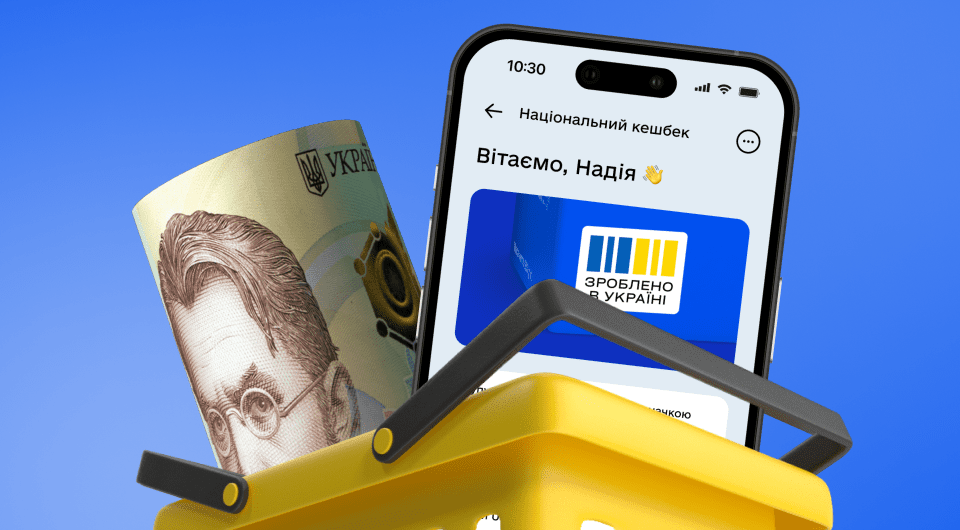
Back in September, there was also discussion about significantly reducing cashback rates for certain goods. “Plans to Slash ‘National Cashback’ Threefold: Who Might See Reduced Purchase Rebates.” Uncertainty is further compounded by the structure of the draft budget for 2027 itself. It contains no specific budget program titled “National Cashback.” However, the documents allocate UAH 9.415 billion to a broader program supporting manufacturing and entrepreneurship; this program includes, among its components, compensation for consumers purchasing Ukrainian goods and services. That is why it is impossible to state unequivocally at this stage that the cashback mechanism has been definitively cut from the budget. In reality, at least two scenarios currently exist: either the program is being scrapped as a standalone instrument, or its mechanism is being partially subsumed into a broader program supporting Ukrainian manufacturing. Adding to the confusion is the fact that the state program itself has been formally extended by the government until April 30, 2028. The official “Made in Ukraine” portal indicates that the “National Cashback” program remains active, with a tiered model—offering 5% or 15% depending on the product category—replacing the flat 10% rate starting in March 2026.
“Nenka Info” also reported on the government’s decision to extend the program: “Cashback until 2028: government extends popular program and alters payout rules.”
However, the legal extension of the program does not in itself guarantee consistent annual funding levels. Actual payouts depend on the funds allocated in the specific state budget. The cashback system underwent a significant overhaul effective March 1, 2026; instead of a flat 10% rate, the state began refunding 5% or 15% of the product cost, depending on the category. The higher rate applies in sectors where Ukrainian manufacturers face stiffer competition from imports—specifically, where the share of imported products in a given segment exceeds 35%. Thus, the saga of the “National Cashback” program for 2027 is far from over.
Pidlasa advocates for removing this item from the budget entirely, as she believes it has become a disproportionately significant political irritant. The Ministry of Economy, conversely, is still considering retaining the program but making it significantly less costly and more targeted. The final decision will depend on the form in which the Verkhovna Rada adopts the 2027 state budget.